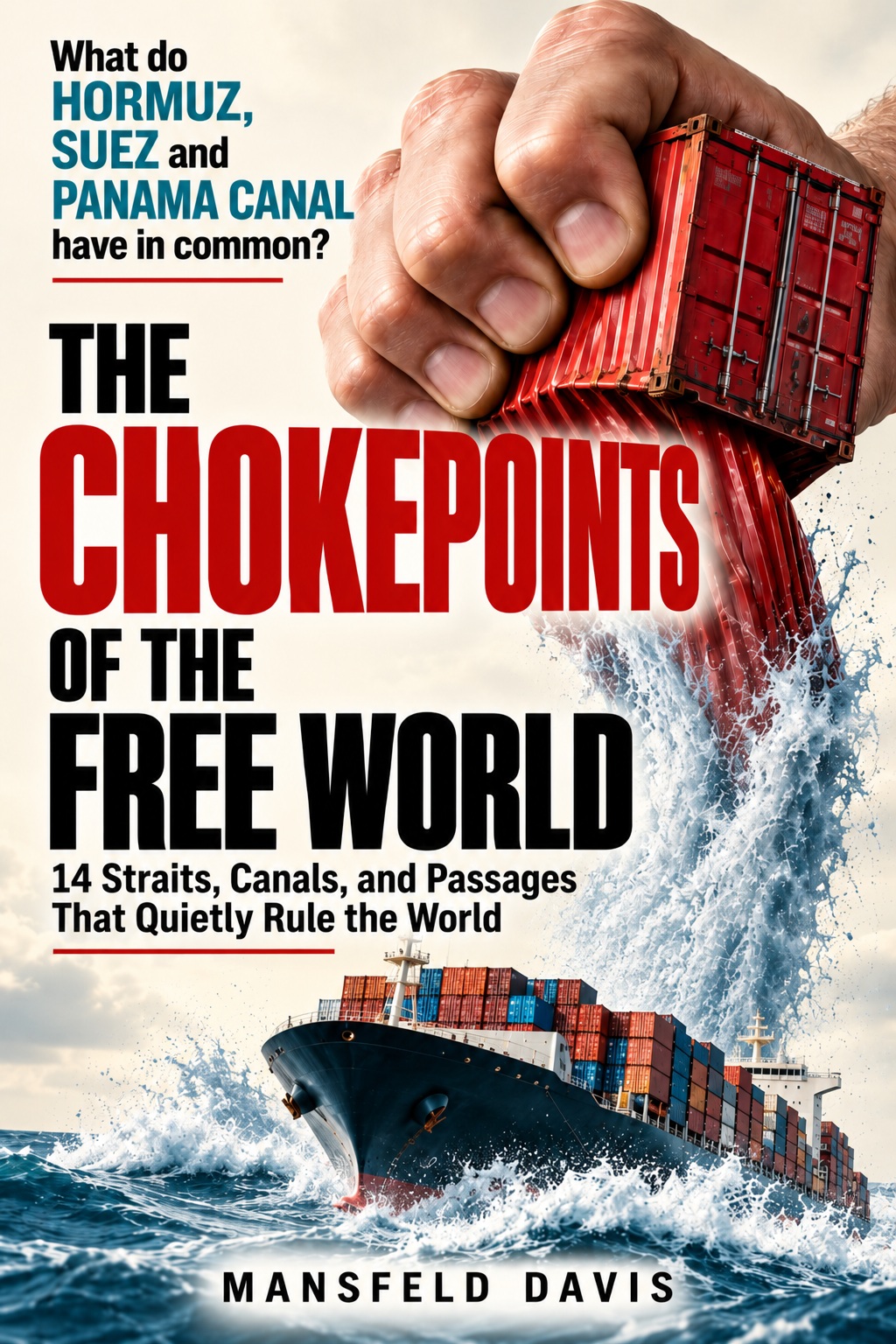
The Chokepoints of the Free World
The narrow places that hold the widest power.
The widest powers on earth depend on the narrowest passages.
Oil, food, components and military power all move through a surprisingly small number of waterways. Travel through fourteen of them, understand the history beneath today’s headlines, and see why a closure thousands of miles away can reach your doorstep.
Oil, shipping and military power
From Hormuz to Panama
What happens if one closes?
Four passages.
Four kinds of risk.
Each passage exposes a different weakness in the system: conflict, delay, congestion or drought.
How the visual identity supports the book’s argument.
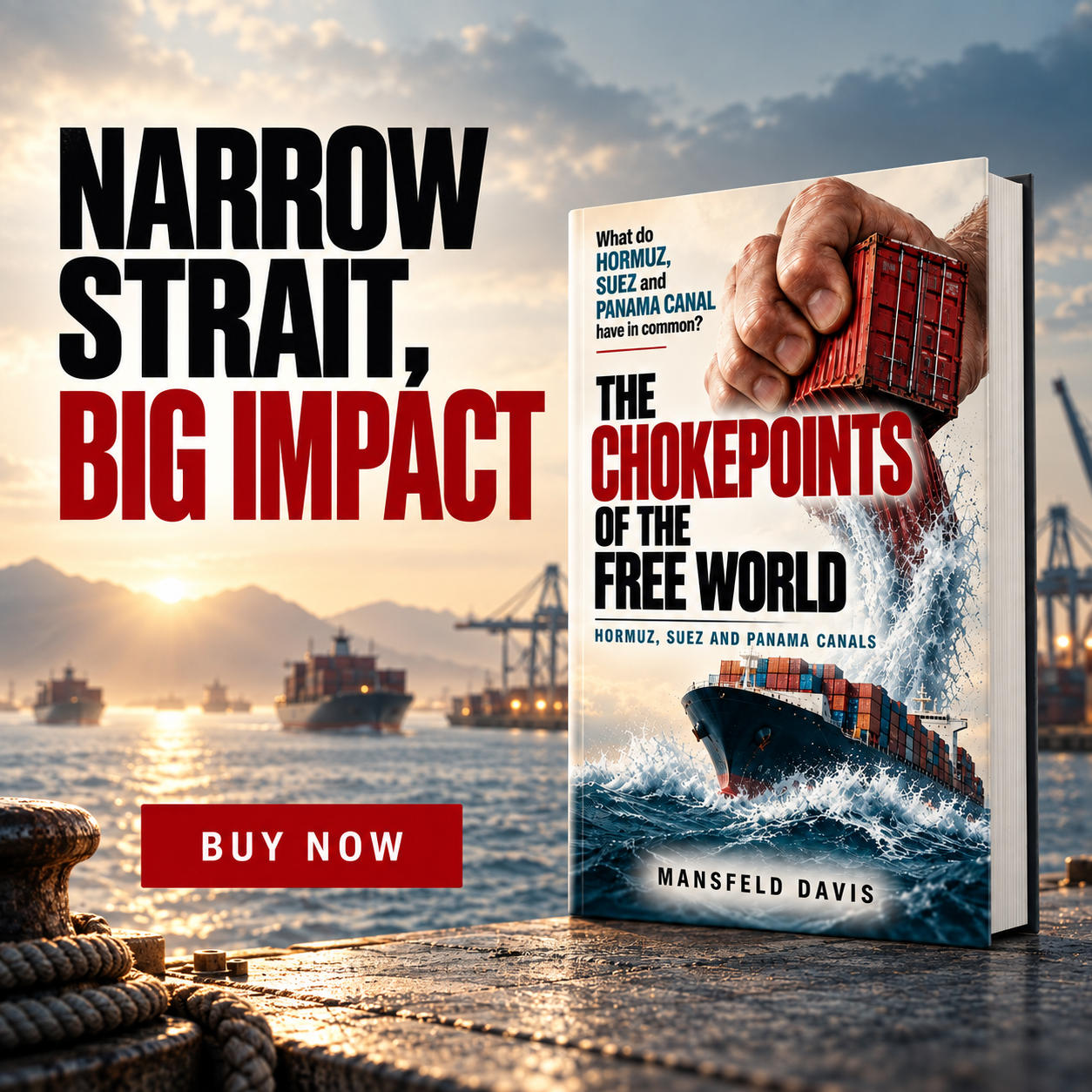
Four ways this book changes how you understand the subject.
See the hidden infrastructure
Understand why everyday prices and supplies depend on a handful of narrow waterways most people rarely notice.
Read crises with context
Use the history of empires, treaties and conflict to understand who controls each passage today.
Anticipate the ripple effects
Trace how a blockage or attack moves through shipping schedules, energy markets, insurance and household costs.
Evaluate strategic choices
Understand the decisions facing governments, navies and businesses when a vital route becomes unreliable.
A closer look
Did you know one stuck ship in the Suez Canal cost the world economy $9.6 billion a day?
A fifth of the world’s oil passes through a gap in the Persian Gulf just 33 kilometres wide. Fourteen such gaps quietly decide how the modern world moves.
The Chokepoints of the Free World takes you through the straits, canals and passages behind the headlines: the Strait of Hormuz, the Panama Canal, the Bosphorus, the Strait of Malacca and ten more. Each chapter tells one chokepoint’s story — the pirates and empires that fought over it, the wars that tested it, and the crisis making it matter today.
Every chapter ends with the question insurers and military planners actually ask: what if it closed?
For readers interested in:
- International relations — how treaties, sovereignty disputes and great-power rivalry play out over a few kilometres of water
- Military history — from ancient naval battles to World War II campaigns and today’s tanker wars
- Global trade and shipping — the infrastructure and chokepoints quietly running the world economy
- Current events — sourced, up-to-date coverage of the crises unfolding in these waters right now
For readers of geopolitics, military history, shipping, international relations and current affairs.
Fourteen passages. One connected world.