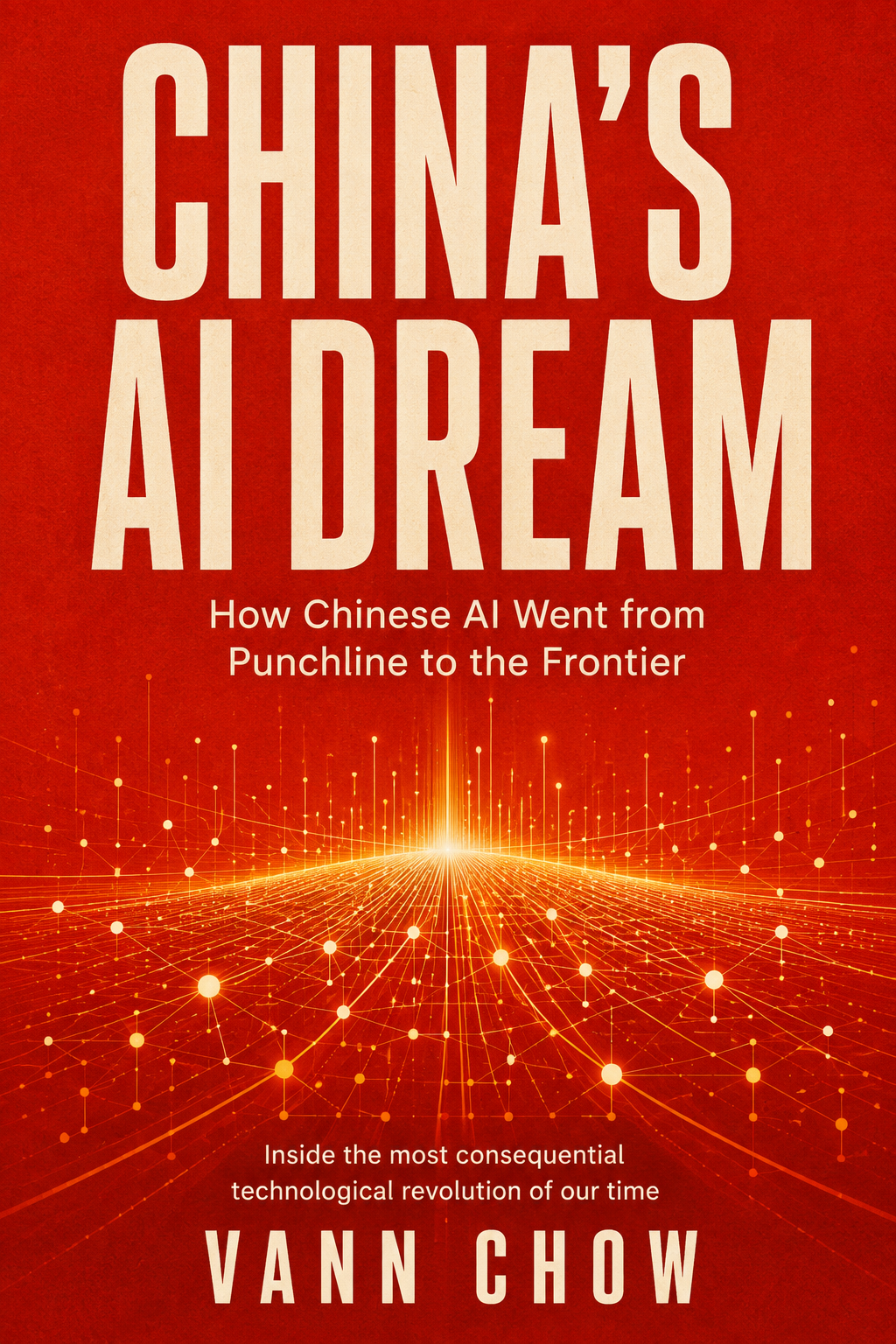
China's AI Dream: How Chinese AI Went From Punchline to Mainstream
Beyond the headlines. Inside the ambition.
The AI race did not follow the script.
This is not a story about one model or one company. It is the larger story of how researchers, founders, manufacturers, investors and policymakers turned a national ambition into a global technological force.
Why China’s AI industry was underestimated
How open-source models accelerated adoption
What China’s rise means for the next phase of AI
From punchline
to the frontier.
Models became competitive. Open weights accelerated adoption. Robotics connected software ambition to manufacturing scale.
How the visual identity supports the book’s argument.
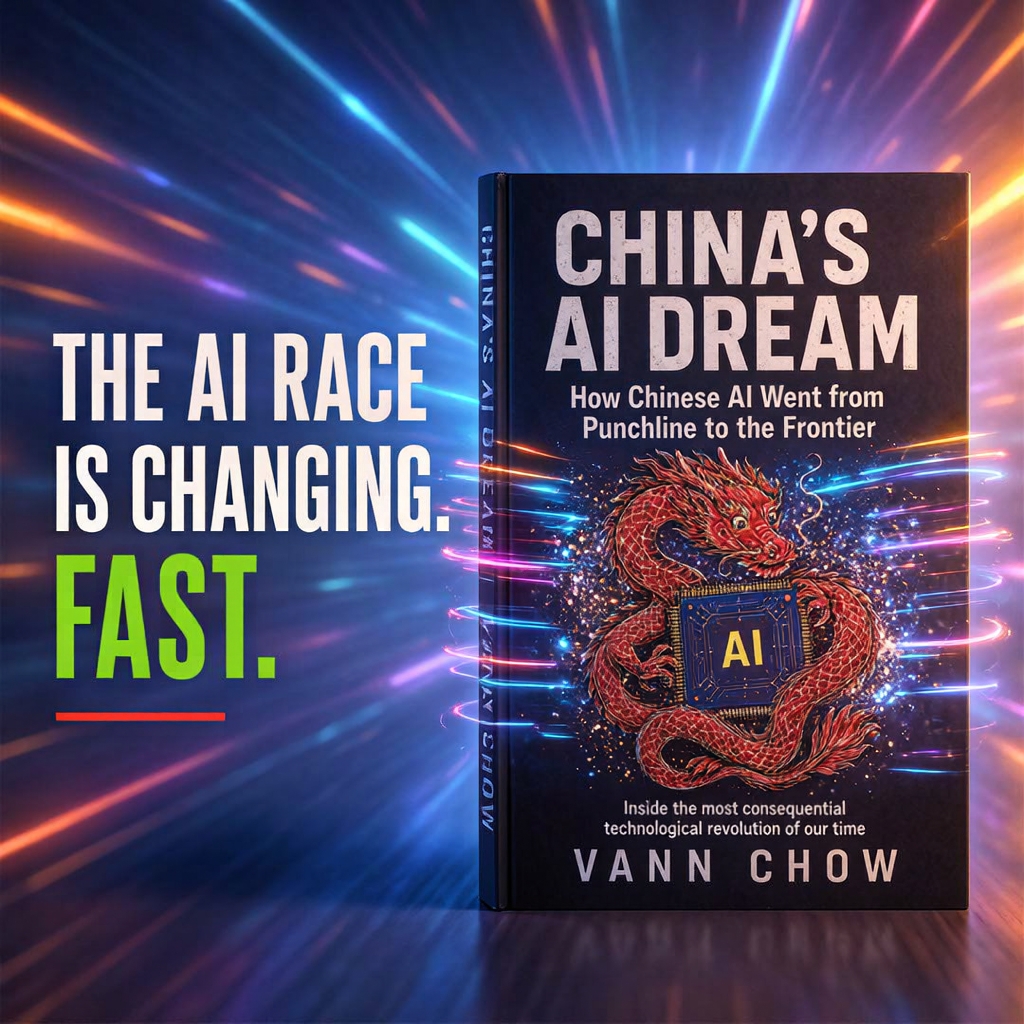
Four ways this book changes how you understand the subject.
Understand the reversal
Learn why Chinese AI was dismissed—and which technical and commercial changes closed the perceived gap.
See the whole system
Connect models to the talent, capital, chips, energy and manufacturing capacity behind them.
Separate signal from hype
Gain a framework for judging claims about open models, robotics and national AI strategies.
Assess what comes next
Understand the consequences for businesses, policymakers and the next phase of global AI competition.
A closer look
On Monday, January 27, 2025, Nvidia's stock had lost $589 billion in a single session, the largest single-day loss of market value ever recorded by a public company, because an obscure Chinese AI company called Deepseek released a model called R1 and open-sourced it. And the 'worst' part of it, the model is actually good.
This is the story of how China's AI dream went from being ridiculued to frontier breakthrough that surprises everyone.
In only a few years, Chinese artificial intelligence moved from being dismissed as an imitation of Western innovation to becoming one of the most capable, affordable and widely adopted forces in global AI.
But this transformation was not the work of a single company, government plan or technological breakthrough. China’s AI dream is made up of millions of overlapping ambitions: policymakers pursuing technological capability, researchers pushing scientific boundaries, entrepreneurs building new companies, parents investing in education, engineers choosing where to dedicate their careers, and ordinary people finding practical uses for increasingly powerful tools.
China’s AI Dream: How Chinese AI Went from Punchline to Mainstream reveals how these different strands came together.
Journey from Beijing’s research districts and Hangzhou’s startups to Shenzhen’s robot factories and Inner Mongolia’s energy infrastructure. Discover:
- How Chinese AI models became globally competitive
- Why affordable, open-weight technology is changing AI adoption
- How semiconductors and export controls influenced Chinese innovation
- China’s emerging advantages in robotics and advanced manufacturing
- The universities, engineers and families behind its talent pipeline
- How government planning, private capital and market competition interact
- What China’s rise means for the United States and the wider world
- Whether today’s enormous AI investments are building a revolution—or a bubble
Written for curious readers rather than technical specialists, this book makes models, chips, tokens and AI agents understandable while keeping the people behind the technology at the center of the story.
China’s AI Dream is an accessible, evidence-led account of how a national aspiration became a global technological reality—and why this will affect us all.
For curious readers who want a clear, human account of technology and power—without needing a computer-science degree.
The technology story reshaping the century